



Introduction
In this article, an attempt has been made to evaluate the impact of evaporative media efficiency in evaporative coolers (cellulose pads and wood wool) on water and electricity consumption in different cities of Iran with varying climatic conditions, using a residential building simulation in EnergyPlus software.
Case Study Building
The unit under study is a north–south residential apartment with two bedrooms, covering an area of 160 square meters, located on a middle floor of a five-story building. All construction materials, including walls, floors, سقف and windows, are considered in accordance with the requirements of Section 19 of the National Building Regulations. For cooling, a single-phase, two-speed 7000 model evaporative cooler is used. The indoor temperature range varies between 24 and 26 degrees Celsius and is controlled by a thermostat. Outdoor temperature for each city changes throughout the year based on real weather data.
Software Used
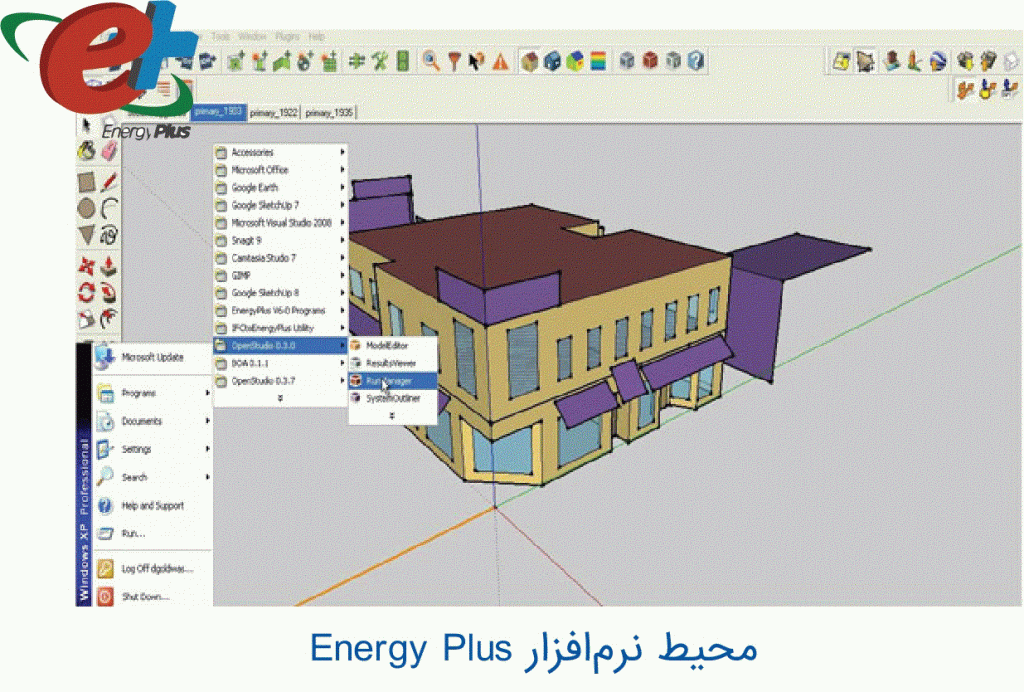
EnergyPlus software is used to simulate water and electricity consumption. This software is currently one of the most accurate tools for building energy and water consumption simulation, capable of performing simulations based on real and dynamic weather conditions throughout the year.
Results
Figures 1 and 2 show the effect of increased efficiency of cellulose pads compared to wood wool on reducing annual water and electricity consumption in different cities of Iran. Based on the results, increasing efficiency from 70% (wood wool) to 83% (cellulose pad) reduces annual water consumption by 12.1% to 26% and annual electricity consumption by 12.7% to 25.5% across different cities. For Tehran, these values are 16.6% and 16.7%, respectively. It is expected that these savings increase during the hotter months of the year when cooling demand is higher, which is particularly important considering water and electricity shortages during peak summer periods.
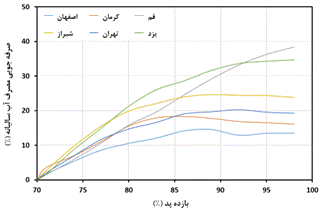
Figure 1: Effect of pad efficiency (cellulose pad) on reducing annual water consumption of the studied evaporative cooler

Figure 2: Effect of cellulose pad efficiency on reducing annual electricity consumption of the evaporative cooler
Example and Further Explanation
To clarify the subject, Figure 3 shows the reduction in water and electricity consumption during the four hottest months of the year, as well as on the hottest day of summer, when using a cellulose pad cooler (83% efficiency) compared to wood wool (70% efficiency) in Tehran. The results indicate that savings during peak heat periods are significantly higher than average values, with water consumption reduced by 19.5% and electricity consumption by 28.8% on the hottest day of the year.
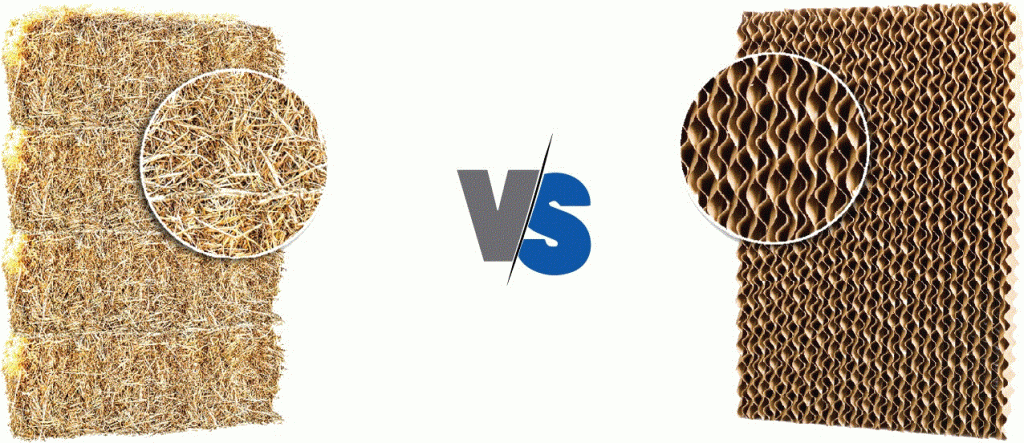

Figure 3: Effect of using a cellulose pad (83% efficiency) instead of wood wool (70% efficiency) on reducing water and electricity consumption during the four hottest months and the hottest day of summer
The reason for this level of savings in electricity and water consumption when using cellulose pads compared to wood wool is the absence of efficiency degradation over time. The deterioration in quality and volume of wood wool due to water absorption reduces its performance and leads to increased water and electricity consumption.
Figures 4 and 5 show the effect of reduced wood wool efficiency on increasing annual water and electricity consumption in different cities. Based on the results, a decrease in efficiency has a particularly strong impact on electricity consumption. When efficiency drops from 70% to 50%, annual water consumption increases by 5.5% to 45.3%, while electricity consumption increases by 44.5% to 65.9%.
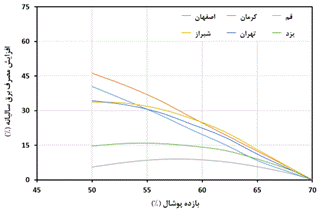
Figure 4: Effect of reduced wood wool efficiency on increasing annual water consumption of the studied evaporative cooler

Figure 5: Effect of reduced wood wool efficiency on increasing annual electricity consumption of the studied evaporative cooler
Article Source
https://www.sciencedirect.com/science/article/abs/pii/S235271022030824X#preview-section-abstract