


Углекислый газ (CO₂) в теплицах
Комплексное руководство по управлению и оптимизации
Содержание
|
1. Важность углекислого газа (CO₂) в теплицах
Управление углекислым газом (CO₂) в теплицах является фундаментальным шагом к снижению затрат, повышению продуктивности и улучшению роста растений. CO₂, как ключевой фактор процесса фотосинтеза, играет жизненно важную роль в производстве сахаров и энергии, необходимых для развития растений.
Фотосинтез — это химическая реакция, в которой растения используют солнечный свет, CO₂ и воду для производства сахаров. Затем эти сахара используются через дыхание для поддержки роста растений. Повышение уровня CO₂ в теплицах может улучшить цветение, снизить опадение бутонов, укрепить стебли и увеличить размер цветов.
2. Влияние концентрации углекислого газа на рост растений
Кривая CO₂ и фотосинтеза показывает, что растения не могут осуществлять достаточный фотосинтез при концентрациях ниже 200 ppm, что приводит к остановке роста. Повышение CO₂ до около 300 ppm (типичный атмосферный уровень) улучшает рост, а генерация может увеличить скорость роста до двух раз или более.
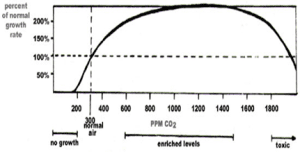
График 1 — Уровень CO₂ и фотосинтез
Ночью концентрация CO₂ увеличивается из-за дыхания растений, но в течение дня, когда начинается фотосинтез, уровень CO₂ значительно снижается. Это снижение может ограничить потребности растений, особенно зимой, когда уровни могут падать ниже 200 ppm.
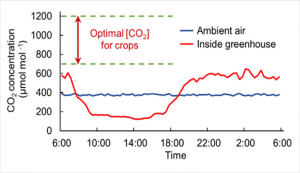
График 2 — Уровни CO₂ в течение дня
3. Генерация углекислого газа в теплицах
Генерация CO₂ — это процесс добавления углекислого газа в среду теплицы для оптимизации фотосинтеза и роста растений. Этот метод широко используется в современных теплицах и предлагает несколько преимуществ:
- Повышение урожайности и качества продукции
- Улучшение эффективности использования воды
- Более крепкие корневые системы и лучшее поглощение питательных веществ
- Снижение затрат на отопление зимой
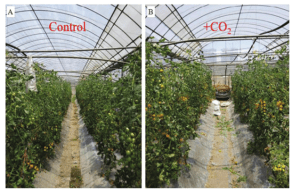
Изображение 1 — Теплица с повышенным содержанием CO₂
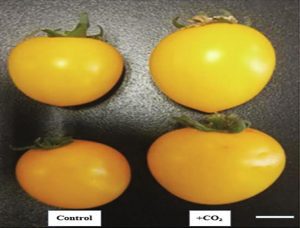
Изображение 2 — Продукция с повышенным содержанием CO₂[/caption>
4. Методы генерации углекислого газа
- Использование компоста
- Выхлопные газы от сжигания ископаемого топлива
- Газы от возобновляемых источников энергии
- Естественная или принудительная вентиляция
- Чистый liquide CO₂
Выбор правильного метода генерации зависит от типа теплицы и её требований. Точный контроль уровней CO₂ необходим для предотвращения токсичности растений (выше 2000 ppm) и обеспечения безопасной среды для работников (ниже 4000 ppm).
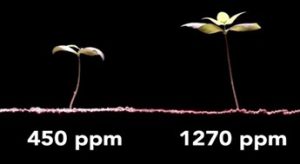 Изображение 3 — Растение с повышенным содержанием CO₂
5. Взаимосвязь между температурой, CO₂ и фотосинтезом
Концентрация углекислого газа и температура напрямую влияют на скорость фотосинтеза. Повышение CO₂ при различных температурах усиливает фотосинтез до определённого предела. После этой точки скорость стабилизируется, и температура становится определяющим фактором.
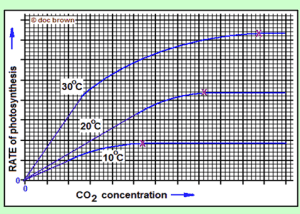
График 4 — Взаимосвязь между температурой, CO₂ и фотосинтезом
| Температура | Уровень CO₂ | Скорость фотосинтеза |
| 30°C | 1 единица | 1,5 единицы |
| 20°C | 2,4 единицы | 1,5 единицы |
| 10°C | 3,5 единицы | 1,5 единицы |
6. Преимущества увеличения и контроля CO₂ в теплицах
- Усиленный рост и более быстрое цветение Продукция достигает созревания быстрее, улучшая количество и качество.
- Снижение затрат Меньшее потребление энергии и воды благодаря повышению эффективности.
- Улучшенное поглощение питательных веществ Генерация CO₂ усиливает поглощение питательных веществ.
При правильном мониторинге и управлении уровнями CO₂ операторы теплиц могут производить высококачественную продукцию и максимизировать продуктивность.
7. Заключение:
Эффективное управление CO₂ является ключевым фактором успеха теплицы. Это не только улучшает рост растений и качество продукции, но также снижает затраты и повышает общую эффективность системы.
Продукты отопления теплиц Energy также разработаны с использованием передовых технологий для повышения эффективности теплиц и снижения эксплуатационных затрат.
8. Дополнительная литература
Fotouhi, M., Marouti, A., & Zarei, G. (2014). Effects of different CO2 concentrations and vermicompost levels on pepper plant performance. National Conference on Modern Agricultural Sciences.
Vakili Bastam, S. (2020). Effect of increased CO2 on improving quantity and quality of greenhouse tomato production. Greenhouse Vegetables, 3(2), 19-24.
Karim, M. F., Hao, P., Nordin, N. H. B., Qiu, C., Zeeshan, M., Khan, A. A., & Shamsi, I. H. (2020). Effects of CO2 enrichment by fermentation of CRAM on growth, yield and physiological traits of cherry tomato. Saudi Journal of Biological Sciences, 27(4), 1041.
Li, Y., Ding, Y., Li, D., & Miao, Z. (2018). Automatic carbon dioxide enrichment strategies in the greenhouse: A review. Biosystems Engineering, 171, 101-119.